Friday, May 4, 2018

My Digital Story


Final Course Reflection

While in this course, my thinking on interrogating technology in the classroom has changed drastically. I always thought that technology in the classroom was just giving the students computers and having them make a powerpoint or write a paper in what they learned in the previous lesson. However, through participating in this course and doing most of the quest, I have learned that technology is more than just making powerpoints, it is making sure that students are engaged while implementing technology. A few technology tools that were throughout this course were; Prezi, VoiceThread, Twitter, Blogger, etc. As a future teacher, I will take these tools with me and try to implement them to help broaden the success of my students.     

Sunday, February 25, 2018

Digital Citizenship

Digital Citizenship vs. Traditional View of Citizenship

Digital Citizenship= is the quality of habits, actions and consumption patterns that impact the ecology of digital content and communities. 

  • Seeks to understand ALL perspectives
  • Respecting the digital privacy of people online
  • Is mindful of physical, emotional and mental health of all people online. 


Traditional Citizenship= the quality of an individual’s response to membership in a community.

  • Treats others with respect
  • Does not steal or damage other peoples' privacy.
  • Protects self and others from harm.

Applying Traditional Citizenship Ideas to Help Students Develop Digital Citizenship


  1. Create digital presentationsAnytime students create content to share online, teachers can supplement the lesson with an age-appropriate discussion about copyright and fair use.
  2. Study historical figures or literacy charactersHave students to think about how they present themselves online, and what it means to leave a digital footprint by creating fake social media profiles for the characters they are studying in history or English classes.
  3. Research a projecthelp them develop information literacy skills by introducing effective search strategies and discussing how to determine whether a website is credible.


Teacher's Role:

Remind students about how important it is to have a digital citizenship. The teacher can do this by; reminding the students that it’s very hard to erase information on the internet, so they should be extra careful about what information and opinions they make public and many other ways to help students become protected on the internet.


Sunday, February 11, 2018

Learning Network


The process for creating, sustaining, and cultivating a network by creating a Google+ account, I thought was very interesting and I was engaged the whole time creating it. This particular network is great when it comes to cultivating technology in the classroom because it gives the students another way of looking at certain assignments. Technology can transform many classrooms into something more valuable and engaging for the students.

To continue to sustain and cultivate my learning network for professional growth, I am going to post different post that reflects who I am as a human being and what there is to come in the future as an educator. I will also use this particular network as I start working in the classroom.

Saturday, January 27, 2018

SAMR Model/TPACK Framework

SAMR Model


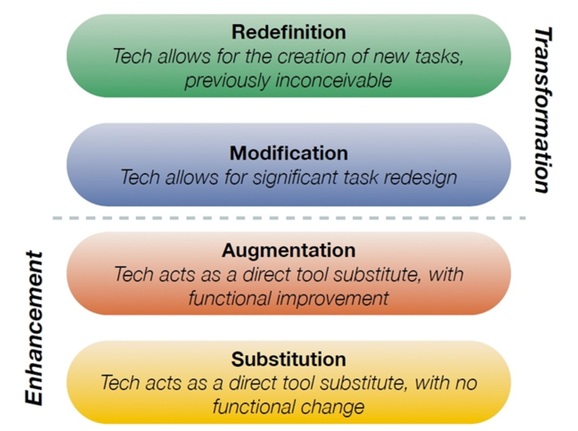
This model has four steps of technology that can impact learning. 

1. Substitution- Easiest stage. It is often referred to as "digitizing worksheets" the teacher is applying the same concept, but they are using a computer instead of pen and paper. 

2. Augmentation- The technology is adding some improvements over the old, traditional way.

3. Modification- Happens when significant task are redesigned. This stage gives that students more of an option and they are able to do things in a more effective manner. 

4. Redefinition- Technology has allowed for the creation of new tools and methods that were not possible before. This stage is creating a brand new learning environment for the students.

Disadvantage: This particular model says nothing about the learning goals. It mainly focuses on how a learning activity has changed, while saying nothing about how to determine the value of that change.

Advantage: This model helps teachers brainstorm new ways to integrate technology into the classroom. 

SAMR

TPACK Framework

This is a tool that could help students and teachers become adapt to 21st century learning. 

TPACK looks at three main knowledge areas;
  • Technological Knowledge
  • Pedagogical Knowledge
  • Content Knowledge
Technology is interwoven into both aspects, pedagogy and content, in order to make the learning more effective for the learners.

After researching these particular frameworks/models, I have established that the TPACK Framework can be very beneficial to students in the classroom. With technology is growing day by day, it is very important to fully understand the evolvement of technology.

Disadvantage: TPACK is not designed to be an entire package or the full view of integrating technology.
Advantage: TPACK creates a student-centered learning environment and low-structure situations.


https://sites.google.com/a/ames.k12.ia.us/ahs-technology-integration/home/tpack-and-samr


"When it comes to teaching, I believe we need more of an understanding of diversity in classrooms. Many students and teachers are living in a diverse society with a multicultural family...valuing and understanding is not just part of our well-being, it is very important. " -Well Said...


multiculturalkidblogs.com